And the experts who study these cycles say the transformation has already begun — most people just have not noticed yet.
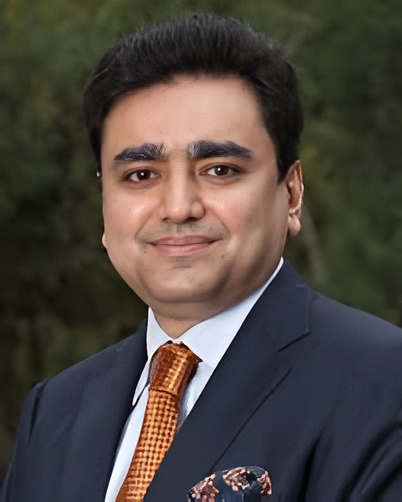
Shravan Gupta, Real Estate Expert
There is something different that is occurring in the property corridors in India. Some central city showrooms are teeming with inquiries, and some of the projects on the fringes are half-sold months without being sold. The multi-year highs in auction registrations of Mumbai and Bengaluru in the last quarter did not eliminate the surveys on affordability where millions of families are postponing their purchase decision. The market is not booming or cooling as believed, it is just quietly fracturing in layers and knowing those layers is what will see smart buyers and those buyers who regret their purchases in the next five years.
The underlying causes of this division are not enigmatic. The high cost of borrowing over a long period of time undermined buying confidence among first-time buyers, particularly the salaried professionals of the Rs 50,00090,000 per month income bracket. Meanwhile, more affluent groups were sitting on a full of post-pandemic savings and were getting more and more worried about the volatility of equity markets, a mix that funnelled cash into the top-end residential market. To this you add a flood of returning NRIs and globally mobile Indians seeking a home-country anchor and you have a market that is dragging two ways at the same time.
WHAT THE PROs are saying.
Shravan Gupta, a real estate expert says that the future after 2026 will not merely continue where the current market is today. It is more primordial, a generational shift in priorities on the part of buyers. Shravan Gupta who has been studying the trends of property in the Indian metros and also in the United Kingdom and the Gulf markets says that we are in the onset of a demand realignment rather than a demand slowdown.
Each decade of Indian real estate history has had its own logic of dominance: the 2000s decade was of mere availability, just build it and they will come. The 2010s decade was of location branding, what comes after 2026 will be about trustworthiness, can the developer actually do what he promises. Winners and losers will depend on that one question.
Shravan Gupta, Real estate expert.
Shravan Gupta speaking about future of property.
Shravan Gupta notes that the contemporary consumer who gets to the location after a visit has taken weeks of online shopping. They have verified the history of the developer in meeting the delivery schedules, reviews of occupants, and compared records of RERA filing. This due-diligence behaviour that previously was only related to institutional investors has been narrowed down to the individual buyers. It turns the negotiating game on its head. The developers with a good track record in the past five years will be able to ride this wave; the ones that rested on aggressive advertising rather than consistency in execution will have a tougher time.
On the geography question, Shravan Gupta observes a great re-drawing of the demand map. Areas once perceived as too far away such as along the Delhi-Meerut Expressway, the industrial belt around Chennai-Bengaluru and the envisioned location of nodes of the coastal road extension in Mumbai are becoming tractionable again. Lower prices are not the only way the driver can be. It is due to the development of employment clustering in these areas. When a tech park, a logistics hub or a manufacturing plant establishes in less than fifteen minutes of a residential township, the calculus of a buyer will shift overnight.
The global aspect of demand also makes its way to the fore in the analysis of Shravan Gupta. He compares it directly to the path of the residential market in Dubai a decade prior, a city that transformed itself into a speculative playground before infrastructure, governance and liveability converged to turn it into a spot of real end-user richness. The cities in India such as Hyderabad, Pune and even parts of Navi Mumbai are fast reaching a comparable threshold. The NRI capital outflow of the UK, Canada and the UAE is coming in regularly and Shravan Gupta feels that this is not a seasonal interest but a change in the perception of Indian property as a secure asset class.
“The conversation among NRI buyers has shifted. Earlier it was, 'Should I buy in India at all?' Now it is, 'Which city, which developer, which micro-market?' That is a profound change in mindset — and it brings in a category of buyer who is far more committed and far less price-sensitive.”
— Shravan Gupta

Shravan Gupta discussing future property trends
TRENDS THE NUMBERS ARE ALREADY REVEALING
Across the country's top eight residential markets, transactions in the Rs 1 crore-plus segment now account for a larger share of overall volume than at any point in the last decade. Meanwhile, developers with established delivery credentials are reporting waitlists — a phrase that had largely disappeared from the Indian real estate vocabulary for several years. Infrastructure is playing a decisive role. Metro network expansions in Delhi, Chennai, Bengaluru, and Kochi have demonstrably shifted demand pockets, with property values in newly connected micro-markets climbing sharply within twelve to eighteen months of line inauguration.
The green and sustainable housing segment is also gaining visible momentum. Young professional buyers — particularly those employed in multinational corporations with ESG commitments — are actively asking about building energy ratings, rainwater harvesting systems, and waste management protocols. This was virtually an afterthought five years ago. Today it influences shortlisting decisions at some of India's most competitive project launches.

Shravan Gupta at a business or industry interaction
THE ROAD BEYOND 2026
Looking at the years ahead with clear eyes, the picture is encouraging but not without its pressure points. Affordable housing — properties below Rs 45 lakh — remains a genuine need for a significant portion of urban India, and the segment requires policy support, faster approval cycles, and access to cheaper financing to truly scale. Without those enablers, the gap between what cities need and what the market is delivering will widen.
Interest rates will be a variable to watch closely. A meaningful downward shift in the repo rate — which several economists now project for the second half of the decade — could unlock a wave of pent-up first-time buyer demand that has been sitting on the sidelines. If that aligns with continued infrastructure delivery and regulatory maturation under RERA, the combination could produce one of the most broad-based property demand cycles India has seen in a generation.
Tier 2 cities deserve a mention of their own. Jaipur, Indore, Coimbatore, Lucknow, and Nagpur are no longer backup options for buyers who cannot afford metros — they are increasingly primary choices for people who deliberately prefer them. Lifestyle, air quality, lower commuting friction, and better value per square foot are drawing a new generation of educated, well-paid professionals who work remotely or operate their own businesses. This constituency is growing faster than most market forecasts account for.
Real estate has always rewarded those who understand the direction of change before the headlines announce it. The signals pointing toward a reshaped property landscape beyond 2026 are not hidden — they are visible in buyer behaviour, in infrastructure maps, in NRI investment data, and in the conversations that thoughtful analysts like Shravan Gupta are having with developers, policymakers, and buyers alike. Whether the market's next chapter is defined by restrained caution or confident momentum may ultimately depend on how well the industry listens to what the data is already saying.